By Sani Modibbo
Kaduna
In an economy where cashless transactions have become the norm and security fears make carrying cash risky, traders and customers now find themselves stranded in a digital dead zone. Payments fail to reflect, calls drop mid-conversation, and WhatsApp messages vanish into thin air.
Instead of focusing on sales, shop owners spend their day waving phones in the air, hunting for bars of reception. It’s a crisis that speaks to a larger national problem, the collision of Nigeria’s cashless drive with a fragile telecommunications infrastructure.
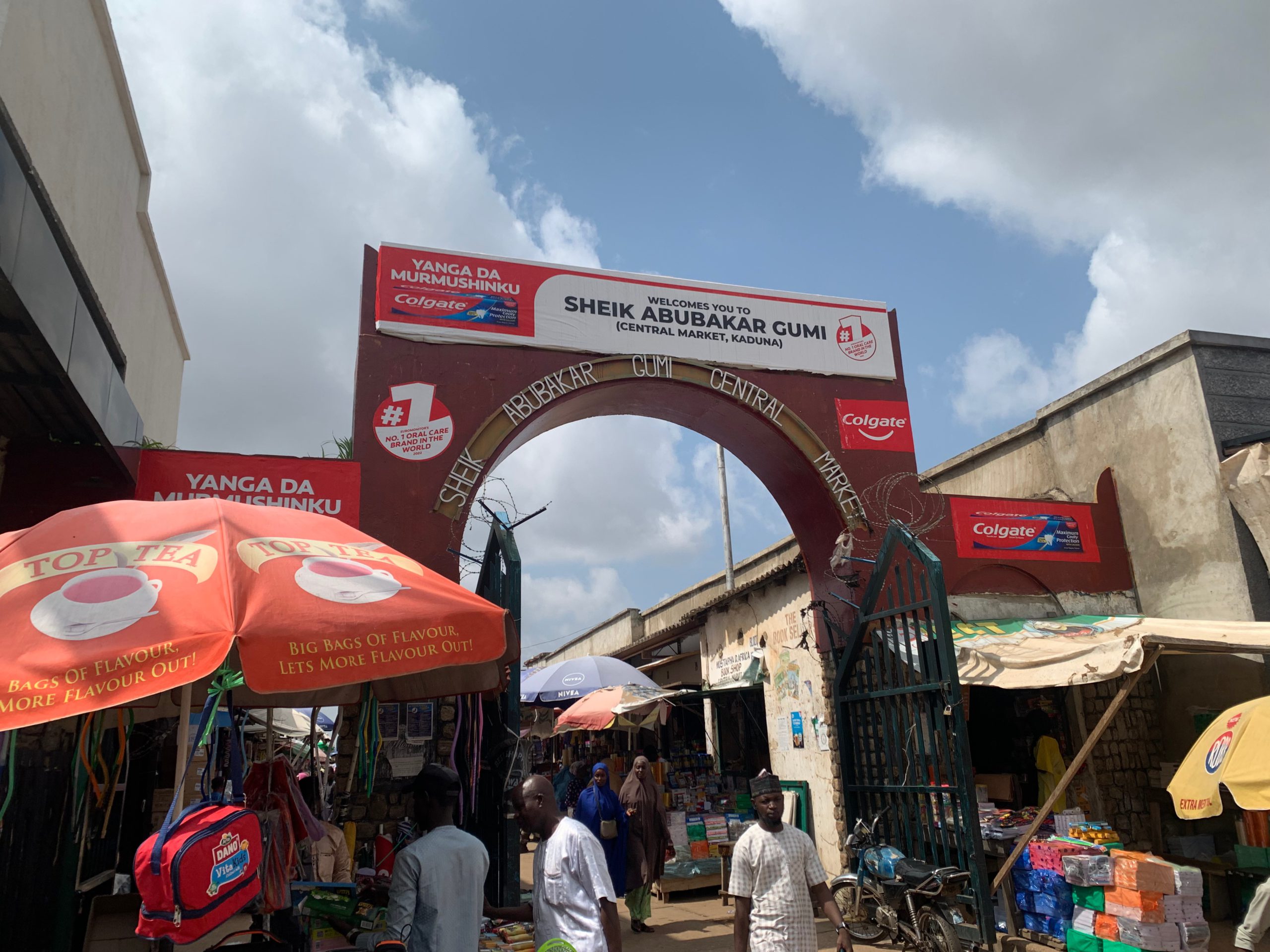
In the heart of Kaduna’s Sheikh Abubakar Gumi Market, one of northern Nigeria’s busiest trading hubs. The buzz of commerce is being muted by an invisible problem,weak mobile networks. For hours each day, payments fail to reflect, calls bounce, and WhatsApp chats vanish into static. Traders pace anxiously, phones raised to the sky, searching for bars of reception. Shoppers wander from stall to stall, hoping one corner of the market has just enough signal to complete a bank transfer.
The frustration, traders say, is not simply bad luck. It is the direct result of frequency interference, overlapping signals from multiple masts installed by operators around the market. Instead of amplifying service, the congestion cripples it.
And Kaduna is not alone. In Kano, traders at major markets have faced similar woes, where the absence of a dedicated base station and unregulated use of signal boosters disrupted connectivity. Across Nigeria, the story repeats itself: digital payments stall, POS machines freeze, trust is strained, and businesses count their losses in a cashless economy still struggling to find its feet.
“We lose sales every day,” said Ibrahim Abdullahi, chairman of the gold sellers’ union and head of the caretaker committee in the market. “Less than 3 percent of users here have access to 5G. Most are still on 2G or 3G. With those weak networks, even the little signal we get keeps switching in and out because of interference.”
Traders describe the same exhausting routine: carrying multiple SIM cards, switching from one provider to another, stepping outside their stalls in search of a stronger spot, or rushing to open spaces just to complete a transaction.
For Muhibbat Tomitope, who sells bags, the delays have become routine. “About 90 percent of us here face this problem,” she told the correspondent. “POS machines freeze. Customers spend 30 minutes or an hour trying to transfer. Many just give up and walk away.”
Also, MJ Aniola of Survania Enterprise said the disruptions have driven some traders to the brink. “Customers call or send WhatsApp messages, but we can’t access them. Even POS machines fail. Many of us are thinking of alternatives if nothing changes,” she said.
Customers are equally frustrated. Fatima, a shopper, said she once had to call a relative in Abuja to complete a transfer after repeated failures in the market. “It was stressful,” she recalled. “We tried more than five times without success. Authorities must act.”
The weak signals also invite fraud. “Transactions that should take two minutes now last 20 or 30,” said Hassan Abubakar Kura, a cosmetics seller. “Opportunists use the confusion to fake alerts or steal items. It’s not just lost money; it’s lost trust”.
According to market authorities say the problem is structural.
Some experts who spoke to our correspondent explained that multiple masts in and around the market are interfering with signals.
Barrister Sani Muhammed Sulaiman, secretary of the Kaduna Markets Development and Management Company said “Telecommunications may not fall directly under our responsibility, but we cannot ignore the complaints. Traders are losing money daily, so we have been engaging with the operators and pushing them to provide a lasting solution.”
On his part, a telecom engineer, Abdulhakeem Usman said “Yes, interference happens when operators use overlapping frequencies or when masts are clustered”.
“That is why the Nigerian Communications Commission (NCC) must allocate frequencies carefully and why providers must install stronger infrastructure to dominate the area’s signal”.
According to NCC, Nigeria has more than 169 million active mobile subscriptions, Yet, in markets like Kaduna’s central hub, traders say that sheer numbers mean little when overlapping masts leave them stranded without reliable service.
The problem has grown more urgent under Nigeria’s push toward a cashless economy. With insecurity making cash risky to carry and Central Bank policies limiting withdrawals, traders and shoppers rely heavily on digital transactions.
But in Gumi Market, where the network blinks on and off unpredictably, cashless becomes a trap.
A trader, Shehu Muhammad lamented “today, a woman tried to pay, but the alert didn’t come until hours later in the night when I got home. She left without the goods because we didn’t know her. By the time the money showed, it was a concern to the correspondent because she had left, but we hope she will return”.
Christopher James, a customer, said he once spent two hours trying to pay for foodstuff after work. “If not for my wife’s ATM card, we would have left everything behind,” he said.
The challenge is not unique to Kaduna. The Nigeria Inter-Bank Settlement System (NIBSS) reported that on Christmas Eve 2023, more than 276,000 POS transactions — about one in four nationwide — failed due to poor network. For traders in Gumi Market, such failures are not seasonal glitches but a daily reality.
In the absence of a lasting solution from operators, some traders have turned to self-help. Abdulrasheed Aliyu, a young trader, said he came up with a digital fix through shared access points.
“At the beginning, we offered the service for free, and many traders quickly joined. Later, we introduced a token fee, though what they pay is not even enough to cover management costs. Still, we remain committed because we believe we are solving a pressing problem. Today, a lot of people rely on our service to connect and run their businesses,” he explained.
“But not everyone welcomed the innovation. Some traders accused them of deliberately blocking signals, while one even alleged they had mounted surveillance cameras.
“When people complain, we simply deregister them and bring in new members. I expected some of these reactions because many people find it difficult to understand how this kind of technology works,” Aliyu said.
For many shop owners, however, the service has become a lifeline, providing a rare pocket of stability in a market still trapped in a digital dead zone.

When contacted, representatives of some telecom providers in Kaduna,they said they were “not authorized to speak directly with the press,” stressing that all official communication must come from their headquarters in Lagos.
However, a staff member admitted the problem is real. “Yes, we are aware of the challenges here. Network issues are everywhere, but in this market it mostly happens during the day because of the crowd. At night, the network works well,” he explained.
Despite the assurance, traders insist that what matters is not explanations but solutions that can guarantee reliable service during business hours.
At its core, the problem is not demand but delivery. Traders are ready to adapt, and customers are willing to pay digitally. But without strong, interference-free coverage, the system collapses.
In view of the above challenges, NCC should urgently coordinate operators to prevent mast congestion and allocate frequencies more efficiently. Telecom providers should install dedicated base stations inside or near the market, equipped with stronger signals capable of handling peak-hour traffic. Government agencies can also offer incentives or mandates for operators to improve infrastructure in high-density commercial areas. Finally, market authorities and traders’ unions can collaborate with independent network engineers to monitor quality-of-service and report persistent failures to the regulator.