BY NONYE EKWENUGO
Kaduna
The Centre for Girls’ Education (CGE) has welcomed the Kaduna State Executive Council’s approval of the Kaduna State Life Skills Policy and the Kaduna State Policy on Gender in Education (2026–2030), describing the development as a major milestone in the state’s efforts to institutionalise inclusive and equitable education.
In a statement signed by its executive director, Habiba Mohammed, the organisation said the approval by the State Executive Council, chaired by Governor Uba Sani, marked a transition from time-bound, donor-driven interventions to a sustainable, government-led framework that would strengthen life skills education and gender inclusion across the state’s education system.
According to CGE, the Life Skills Policy is designed to equip young people with the knowledge, skills, attitudes and values required to succeed in school, employment and everyday life, while the Gender in Education Policy provides a framework for promoting equity, inclusion, participation, retention, completion and improved learning outcomes for all learners.
The organisation said the two policies would move life skills and gender equity from peripheral interventions to core components of Kaduna State’s education system.
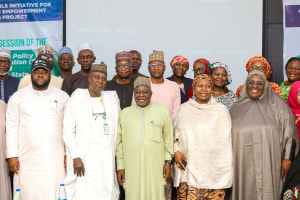
CGE noted that it contributed to the development and validation of the policies through its system strengthening project, implemented with support from Co-Impact, OASIS Initiative and the Malala Fund, in partnership with the Adolescent Girls Initiative for Learning and Empowerment (AGILE) Kaduna State Project and the Kaduna State Ministry of Education.
The organisation explained that the policies were built on over 18 years of implementing its Safe Space model, which independent evaluations found had contributed to reducing child marriage, increasing school enrolment and delaying early marriage among adolescent girls.
It added that through the AGILE programme in Kaduna, more than 127,319 girls and 6,250 boys aged between 14 and 18 have benefited from life skills interventions, while over 1,400 female and male teachers have been trained as mentors.
According to the statement, embedding the model into government policy would ensure that life skills education becomes a permanent feature of the state’s education system beyond externally funded programmes.
CGE said the policies would address structural barriers limiting access to education, improve retention and completion rates, particularly for girls and other vulnerable learners, institutionalise life skills as a co-curricular component of education, support data-driven decision-making across the state’s 23 local government areas, and guarantee continuity of the reforms beyond donor-supported projects.
The organisation also expressed appreciation to Governor Uba Sani for providing the political leadership that led to the approval of the policies and commended the Commissioner for Education, Professor Abubakar Sani Sambo, for steering the policy development and validation process.
It further acknowledged the contributions of the AGILE Kaduna State Project Implementation Unit led by State Project Coordinator, Hajiya Maryam Sani Dangaji, the World Bank, the Kaduna State House of Assembly Committees on Education and Justice, the Kaduna State Senior Secondary Schools Education Board (KADSSEB), Kaduna State Schools Quality Assurance Authority (KSSQAA), Kaduna State Planning and Budget Commission, the Ministries of Education, Information and Local Government Affairs, the Kaduna State Bureau of Interfaith, as well as traditional, religious and community leaders.
The organisation equally thanked its funding partners, Co-Impact, OASIS Initiative and the Malala Fund, for supporting its contribution to the policy development process.
CGE reaffirmed its commitment to supporting the Kaduna State Government during the implementation phase through technical assistance, teacher capacity building, gender-responsive education sector budgeting and monitoring to ensure that every child in the state has access to quality and inclusive education.