BY OUR CORRESPONDENT
Abuja
The Christian Association of Nigeria (CAN), 19 Northern States and the Federal Capital Territory (FCT), has warned political actors against turning the 2027 general elections into a contest of ethnic and religious divisions, saying Nigeria cannot afford another election cycle dominated by “political warfare” while citizens grapple with insecurity, poverty and unemployment.
The association said Nigerians were increasingly “insecure, hungry, unemployed, disillusioned and distrustful of public institutions,” while political actors appeared more focused on the struggle for power.
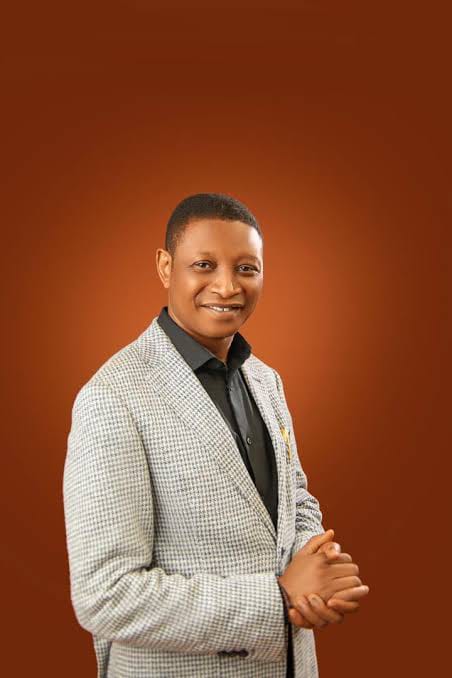
In a strongly worded statement signed by its Chairman, Rev. Dr. Yakubu Pam, Northern CAN cautioned political parties and candidates against exploiting religion, ethnicity and regional identity for electoral advantage.
“Christianity and Islam must never be weaponized for electoral advantage,” it said.
The association urged Christian and Muslim leaders to reject inflammatory rhetoric and resist attempts by politicians to exploit religious identities for votes, noting that the two communities had lived, traded and raised families together for generations.
“2027 must not become another occasion for political elites to mobilize Nigerians along ethnic, religious and regional fault lines while the fundamental problems of the people remain unresolved,” Northern CAN said.
The association said it was speaking “not as a political party, nor as an organization seeking political office,” but as Christian leaders concerned about the survival, unity, peace and future of Nigeria.
“Our message is simple and unequivocal: Nigeria cannot continue on a path where citizens are increasingly insecure, hungry, unemployed, disillusioned and distrustful of public institutions while political actors become increasingly preoccupied with the struggle for power,” the statement said.
Northern CAN identified worsening insecurity as its “first and most urgent concern,” citing terrorism, banditry, kidnapping, communal violence and other forms of criminality affecting communities, particularly in northern Nigeria.
According to the association, insecurity has displaced entire communities, disrupted farming and denied children access to education, leaving families to live in perpetual fear.
“A government’s most fundamental responsibility is the protection of life and property,” it declared, urging the Federal and state governments to deliver measurable improvements rather than assurances.
“We therefore respectfully but firmly tell the Federal Government and all state governments: the Nigerian people deserve more than assurances. They deserve measurable security outcomes,” it said.
While commending the sacrifices of the armed forces and other security personnel, the association urged government to provide security agencies with adequate intelligence, equipment, technology, manpower and welfare.
It also called for effective prosecution of arrested criminals, warning that arrests without convictions would not provide lasting deterrence.
“No Nigerian should have to negotiate with criminals for the right to live, farm, worship or travel in his or her own country,” the association said.
On the economy, Northern CAN expressed concern over the impact of economic reforms on ordinary Nigerians, acknowledging that reforms could require sacrifices but insisting that their ultimate success should be measured by their effect on citizens.
“Millions of families are struggling with food, transportation, housing, school fees, healthcare and electricity costs,” it said, adding that “the poor cannot eat promises of future prosperity.”
The association called for stronger social protection, food security programmes, employment creation, agricultural support and other measures to reduce pressure on poor and vulnerable households.
It also demanded greater transparency in the management of public resources, arguing that political leaders must share in the sacrifices being demanded of citizens.
“The political class cannot preach austerity to citizens while government continues to be associated with extravagance, waste and unexplained expenditure,” it said.
Northern CAN warned that Nigeria’s young population could become a “lost generation” if unemployment, poverty and lack of opportunity persisted.
It said too many young Nigerians increasingly viewed migration, political violence, cybercrime or hopelessness as possible escapes from economic hardship.
“We need an economy that creates job not merely one that creates wealth for a small number of people,” Northern CAN said.
It called for policies that would support farmers, manufacturers and entrepreneurs while equipping young people with skills and creating opportunities for decent employment.
The group said northern Nigeria required particular attention because insecurity, poverty, educational disadvantage and unemployment were reinforcing one another.
“We cannot secure the North merely by deploying soldiers and police officers,” it said, stressing that the conditions that make young people vulnerable to recruitment by criminal and extremist networks must also be addressed.
Northern CAN called for a coordinated national development initiative focused on the North, involving governments, development partners, traditional institutions, religious organisations and local communities.
It said such an initiative should prioritise security, education, agriculture, healthcare, rural infrastructure, youth employment, women’s economic empowerment and the rehabilitation of displaced communities.
“The people of Northern Nigeria should not be treated merely as an electoral constituency to be visited during campaigns,” the association said.
“They deserve to be treated as citizens whose dignity and future matter every day.”
The association also urged President Bola Ahmed Tinubu, governors, legislators and other public officials to embrace greater transparency and accountability.
“Political power is temporary, but the consequences of governance can last for generations,” it said.
Northern CAN called for transparency in public procurement, government contracts, borrowing, expenditure and the management of public institutions.
It further urged anti-corruption agencies to operate professionally and independently.
The association challenged political leaders seeking office in 2027 to publish their records and allow voters to judge them on performance rather than propaganda.
“If corruption is wrong when committed by an opponent, it remains wrong when committed by an ally,” it said.
“Nigeria does not belong to those who temporarily occupy positions of power. Nigeria belongs to all of us and we owe future generations a nation better than the one we inherited.”
It called for leadership that “fears God, respects the Constitution, protects the weak, rewards competence, punishes corruption and treats every Nigerian as a citizen of equal worth.”
Northern CAN said its engagement with government would remain constructive when government did what was right, but pledged to “speak truth to power” when necessary.